Marengo's Interstate Exit Isn't the Bottleneck. The Water Main Is.
September 3, 2026
September 3, 2026
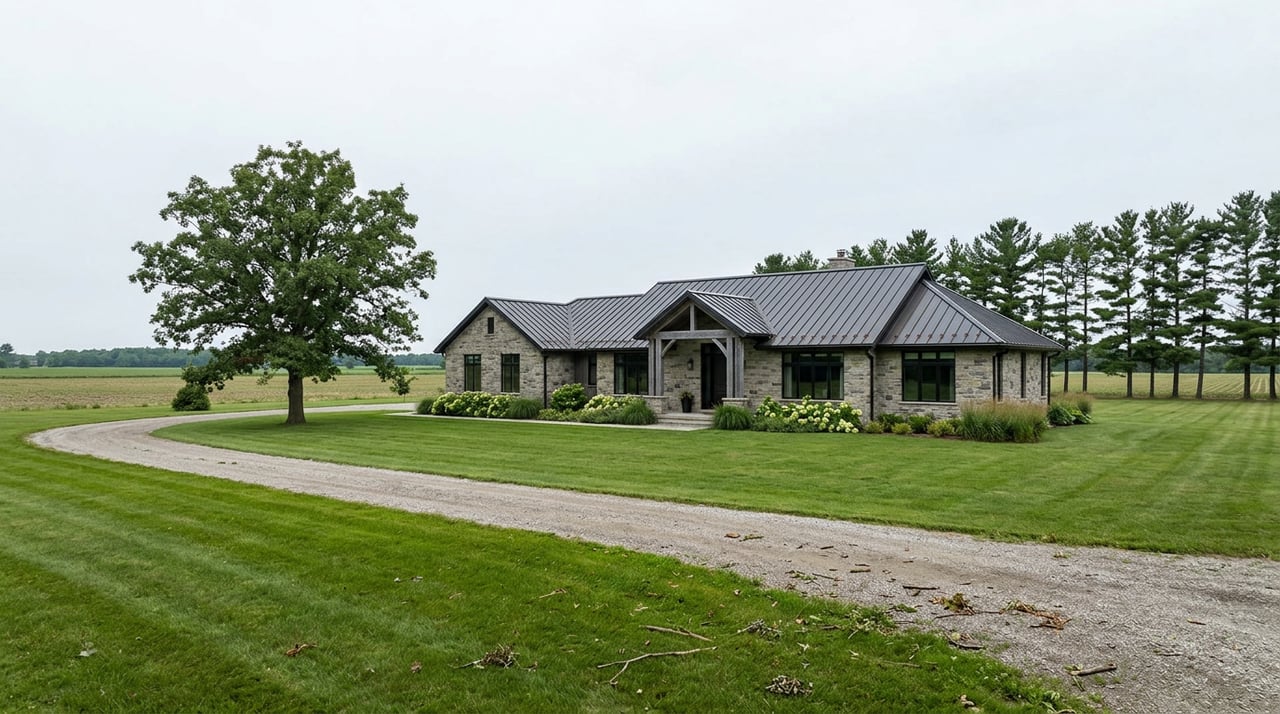
"We have the exit, so where are the businesses?" That is the question Marengo's own city government has been fielding since 2019, when McHenry County's only interstate interchange opened at Route 23 and I-90. Drive that stretch today and you will still find mostly farmland on either side of the ramps. No warehouses, no truck yards, no retail pad sites. Just farmland, a roundabout, and a sign.
If you are comparing Marengo to a faster-growing neighbor like Huntley, that gap is worth understanding before you read too much into it. The interchange was never the thing standing between this land and development. The pipes were.
An interstate interchange gets you off the highway. It does not get you water, sewer, or the electrical capacity a manufacturer or logistics company needs to actually build. Marengo has had the first without the second for the better part of a decade now, and to a developer evaluating a site, that missing infrastructure is disqualifying no matter how good the highway access looks on a map.
The land around the Route 23 exit sits in what is mostly still agricultural use, unchanged since the interchange opened. That is not a failure of the interchange. It is the predictable result of building an off-ramp before building the utilities that make the land next to it usable for anything other than farming.
Marengo has been closing that gap in pieces, funded almost entirely through state and county grants rather than local tax dollars. Here is how the money has moved:
| Year | Funding Secured | What It Extended |
|---|---|---|
| 2022 | Nearly $27 million from the State of Illinois | Utility lines from the city toward the interchange, reaching employers like Unilock |
| 2025 | $3 million site readiness grant, backed by a $750,000 McHenry County match loan | The extension toward Anthony Road |
| 2026 | $4.6 million grant from the Illinois Department of Commerce and Economic Opportunity | The final connection from city infrastructure to the tollway corridor |
Utilities reached Unilock this past June, right on the schedule the city had laid out. The next stretch, extending the line to roughly Anthony Road, is targeted for this October, with the full project wrapping by the end of 2028. When it does, the city expects to have more than 170 shovel-ready acres sitting at McHenry County's only interstate interchange.
That 2028 date matters more than the 2019 opening date. The exit created access. The utilities create the ability to build. Those are two different events, separated by nearly a decade, and only one of them actually changes what the land can be used for.
City Administrator Derik Morefield has described the open land along the corridor as "this is the next opportunity" for growth along I-90, and local officials have been direct about the model they expect: infrastructure now, private development later. That is a bet, not a guarantee, but it is the same bet that already paid off a few exits east.
Officials have pointed to Huntley, which sits at its own I-90 interchange in Kane County and already hosts an Amazon facility, as a rough preview of what a fully serviced interchange corridor can become over time. The comparison isn't that Marengo will look like Huntley next year. It is that the pattern, utility investment followed by industrial and commercial tenants, followed by a broader tax base, tends to play out over a couple of decades once the plumbing is in the ground.
Mayor John Koziol has framed the payoff for current residents in tax terms rather than growth terms: more industrial and sales tax revenue is meant to reduce how much of the load falls on residential property taxes. That is the argument the city is making to its own residents, and it is worth knowing if you are evaluating Marengo as a place to buy, because it is a projection tied to a 2028 completion date, not a current fact about your tax bill.
None of this shows up yet in Marengo's residential numbers, and that gap is itself informative. Over the three months ending May 2026, homes in Marengo sold at a median price of $330,000, up 5.5 percent from the same period a year earlier. Price per square foot rose to $200, up 6.4 percent year over year, and homes were moving faster, an average of 42 days on market compared to 60 days the year before.
That is a healthy, steady residential market. It is also a market almost entirely disconnected from the interchange story. The homes selling in that window are in established Marengo neighborhoods, not on the still-agricultural parcels along Route 23. Land at the interchange is currently valued and taxed as farmland, because that is what it is being used for right now. The appreciation showing up in the residential numbers has nothing to do with the utility extension. It is a separate market moving on its own timeline.
That distinction is the part easy to miss if you only look at a median price and assume it tells you something about the whole town. It tells you about the houses that already exist. It tells you nothing about what happens to raw acreage once water and sewer arrive and a parcel's highest use changes from row crops to a warehouse pad.
If you are evaluating property near the Route 23 interchange as an investment, the practical takeaway is to stop treating the exit ramp as the signal and start watching the utility timeline instead. The phases the city has laid out, utilities that reached Unilock this past June, an extension toward Anthony Road targeted for this October, and full connection to the tollway by the end of 2028, are the actual triggers for when land use and land value along that corridor are likely to shift. An interchange without service capacity has already sat idle since 2019. There is no reason to expect that to change before the pipes do.
For a residential buyer weighing Marengo against a town like Huntley that is further along this same curve, the honest comparison is not "which town has better numbers today." It is understanding that Marengo's residential market is currently pricing in none of the industrial upside the city is planning for, which cuts both ways. You are not paying a premium for a promise that has not been kept yet. You are also not buying into a tax base that has already grown to support the town the way officials expect it to by the 2030s.
If you own or are considering farmland or acreage anywhere near this corridor, the development timeline, enterprise zone status, and zoning questions are worth walking through with someone who has handled land-development and agricultural transactions in McHenry County specifically, not real estate in general. That kind of property does not behave like a single-family listing, and a conditional use change or annexation question can matter more to your eventual sale than anything the median price is telling you.
Does the utility extension change how nearby residential land is currently zoned or taxed? Not automatically. Rezoning and reassessment typically follow annexation or a formal use change request, not the arrival of a utility line by itself. Anyone holding land near the corridor should ask this question directly of the city rather than assuming a timeline.
Is 2028 a hard completion date? It is the city's current estimate for the final phase, based on grant-funded work already underway. Infrastructure projects of this size can shift, and the earlier two phases in this same project also moved later than original hopes before funding came through.
Does industrial development near the interchange affect existing Marengo neighborhoods? That depends entirely on distance, current zoning, and the specific parcels involved. It is not something to assume in either direction without looking at the actual map and the city's own land use plans.
Marengo's interchange has spent years now being a highway exit with nowhere to go. The utility project underway is what actually determines whether the next chapter looks like more farmland or something closer to what Huntley became. If you are weighing a purchase, a hold, or a sale anywhere along that corridor, or anywhere else in the Fox Valley, the team at Swanson Real Estate, Inc. has spent decades reading exactly this kind of local signal, from farmland and development parcels to first homes and income property. Reach out when you are ready to talk through what a specific property in this market actually means for your plans.
Stay up to date on the latest real estate trends.

We pride ourselves in providing personalized solutions that bring our clients closer to their dream properties and enhance their long-term wealth.